Off-Track Garage Door Repair
A garage door that has come off its track almost never fails on its own, something else broke first. This page covers how doors go off track, why simply pushing the door back on rarely holds, and what a proper off-track repair actually addresses.
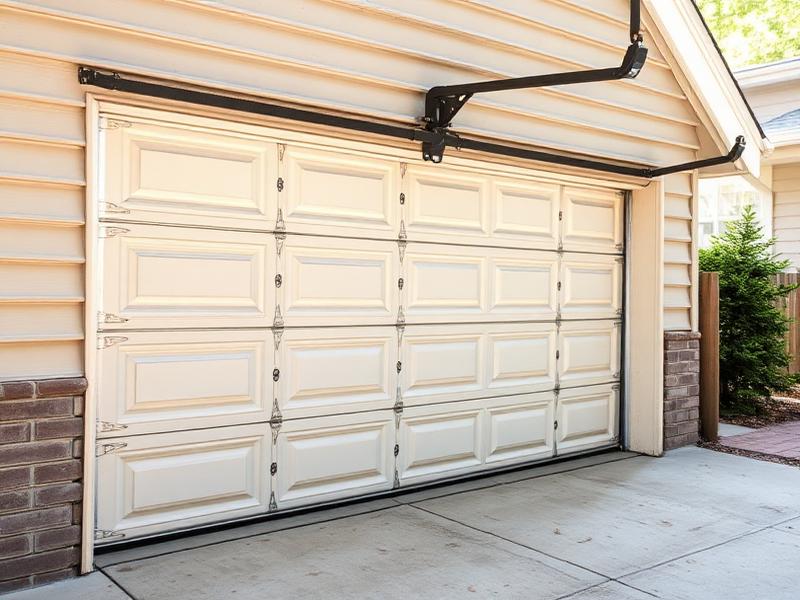
What off-track garage door repair involves
When a residential garage door comes off its track, the visible problem, the door hanging crooked, jammed in the opening, or with one roller dangling in mid-air, is almost always a downstream effect of a different failure. A cable snapped and let one corner drop. A roller stem broke and the section lost its guide. A hinge sheared off. Something backed into the door and knocked a section out of alignment. Simply forcing the door back onto the tracks without finding the original cause is a short-term fix that almost always fails again within days.
Our first job on an off-track call is to figure out what actually went wrong. That usually starts with looking at the cables on both sides of the door. If one cable is loose or has jumped off its drum, that side of the door has dropped and pulled rollers out of the track. If a roller stem has broken, you'll see the roller dangling from its hinge with the stem sheared. If a hinge itself has failed, two sections will have rotated relative to each other and pulled the whole assembly out of line.
Once we know the cause, we can plan the actual repair. The door has to be supported so it can't drop further, then the affected rollers, cables, or hinges are replaced with the correct hardware for the door. The sections are guided back into the tracks in the right order, the tracks are checked for bends or dents, and the door is cycled by hand to confirm it moves cleanly through its full travel before the opener is reconnected.
Bent track is a special case. Light track damage, a small dent from a bumper, for example, can usually be straightened in place. More severe damage means the track has to be replaced, because a distorted track will keep chewing up rollers and pulling the door back off. If the track needs to be replaced, we'll show you the damage before ordering the part.
After the door is back on the tracks and the underlying failure is fixed, we run a full balance test. The opener is disconnected, the door is lifted by hand to about waist height, and we watch what it does when we let go. A properly balanced door with sound springs will stay roughly in place. A door that drifts up or drops means the springs are out of adjustment and will keep stressing the tracks, so we address that too, before the door goes back into service.
Off-Track Garage Door Repair in Houston
Off-track doors in Houston often come from worn rollers, loose track brackets, or a vehicle bumping the door. Ground movement in the area's clay soil can also shift a garage slightly over time and push tracks out of alignment.
Signs you need off-track garage door repair
- Rollers visibly out of the track
- The door is tilted or jammed partway
- Bent or dented track sections
- Scraping or popping as the door moves
- Gaps between the door and the frame
What to expect
Do not run the opener. The technician safely lowers the door, straightens or replaces track sections, replaces worn rollers and hinges, and tests the full travel.
Common questions
Can I just push the door back onto the track myself?+
It's risky and rarely lasts. The original failure, a broken cable, a snapped roller stem, a sheared hinge, is still there, and forcing the door can bend the track or cause further damage. Call before you push.
How long is an off-track repair?+
For a straightforward roller-and-cable off-track on a standard door with parts in stock, most repairs take one to two hours.
Will you need to replace the whole door?+
Almost never. Sections, rollers, cables, hinges, and even individual track pieces are almost always replaceable. Full replacement is only warranted when multiple sections are structurally damaged.
Garage door problems?
We can help today.
Call to speak with a local garage door repair technician about your door.